Destination Guide
Hidden Beaches of the Mediterranean
Find quiet coves on Greek and Italian islands.
Discover Your Perfect Island Escape
By David Thompson | Updated December 3, 2026
Greece is home to over 6,000 islands, each with its own unique character, history, and beauty. Only about 200 are inhabited, but that still leaves an overwhelming menu for travelers. From the iconic whitewashed villages of Santorini to the lush landscapes of Crete, from the party scene of Mykonos to the quiet charm of Paros, there's a Greek island for every type of traveler. Start from Athens and you have the best ferry hub in the country.
The choice is genuinely the hard part. Pick the wrong island and you may end up on a party strip when you wanted a fishing village, or in a sleepy hamlet when you wanted nightlife. In this guide, we'll help you choose the perfect Greek island based on your interests, whether you're looking for adventure, relaxation, nightlife, or cultural exploration. We will also cover the practical mechanics of island hopping: ferries, timing, packing, and how to avoid the most common mistakes that turn a dream trip into a logistical headache.



The most useful way to choose is by travel personality rather than by rankings. Are you traveling for romance, for family, for nightlife, for history, or for beaches? The Cyclades, the famous island group that includes Santorini and Mykonos, lean dramatic and photogenic. The Sporades and Ionian islands are greener and lusher. The Dodecanese, near Turkey, mix medieval history with long beaches. Crete stands alone as a continent-sized island that can absorb a whole trip. Decide what matters most and let the island follow.
Budget also matters. Mykonos and Santorini are the most expensive islands, especially in peak season, while Naxos, Paros, and the smaller Cyclades offer similar Cycladic charm at a fraction of the cost. Crete is the best value overall, with excellent food and rooms at genuinely affordable prices outside August.
Crete is Greece's largest island and offers something for everyone. From ancient Minoan ruins to stunning beaches, from mountain villages to vibrant cities, Crete has it all. It is large enough to reward a full week and forgiving enough to absorb planning mistakes. Explore our Crete route for a detailed travel plan.
History buffs, nature lovers, families, foodies. Crete is the one island that genuinely suits almost everyone, which is why it is the best first choice for uncertain travelers.

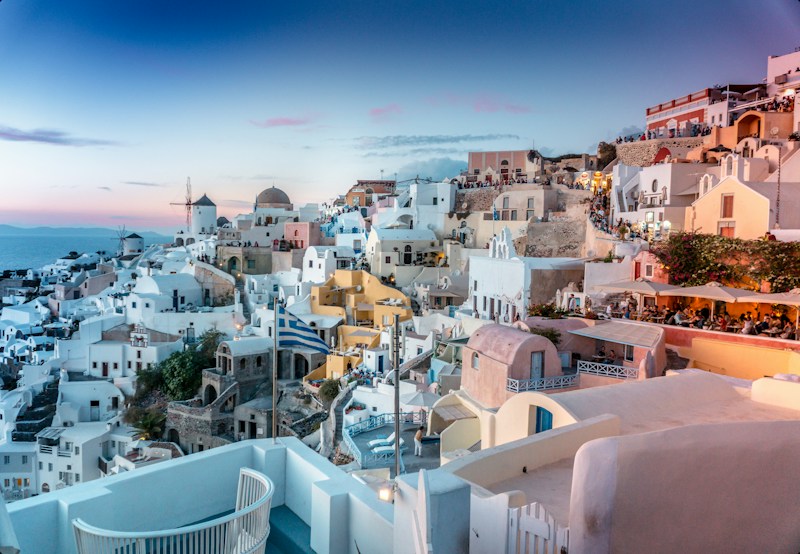
Santorini is famous for its whitewashed villages, blue-domed churches, and breathtaking sunsets. It's the perfect destination for couples and honeymooners. The island is the rim of a flooded volcanic caldera, and the cliffs that plunge into the sea are the geological proof of one of history's largest eruptions. The views justify the hype, but the prices and crowds in peak season test patience, so choose your dates and accommodation carefully. See our Santorini route for a focused plan.
Romantic getaways, honeymooners, photographers. Not ideal for travelers seeking quiet beaches or budget travel.
Mykonos is Greece's premier party destination, with world-famous clubs, beach parties, and a vibrant nightlife scene. Beyond the parties, the island has a charming Chora of whitewashed lanes, windmills, and a pelican mascot tradition, plus easy access to the archaeological site of Delos. The cost is high and the crowds are relentless in August, but for travelers who want luxury and energy, it is unmatched.
Partygoers, young travelers, luxury seekers. Not ideal for those wanting peace, families with young children, or budget trips.
Paros offers the perfect balance between lively towns and quiet beaches. It's great for families and couples looking for a relaxed vibe, and it has become the smart alternative to Mykonos for travelers who want Cycladic beauty without the price tag. It is also a ferry hub, making it a natural base for day trips to Antiparos, Naxos, and smaller islands.
Families, couples, water sports enthusiasts. Paros is the best all-rounder in the Cyclades.

Choose Crete for Minoan ruins and ancient history, plus the deepest regional food tradition in Greece. Few islands combine archaeology, mountains, and coastline so completely.
Choose Santorini for stunning sunsets and whitewashed villages. The caldera views are genuinely unmatched, but book a caldera-side room in a quieter village like Imerovigli to avoid the Oia crowds.
Choose Mykonos for world-class clubs and parties. The scene peaks from late July through August, with international DJs and beach clubs that run until dawn.
Choose Paros or Naxos for the Cycladic look without the extremes, with great beaches, good food, and ferry access to neighboring islands.
Medieval castles, ancient ruins, and great beaches. The Old Town is a UNESCO World Heritage site and one of the best-preserved medieval cities in Europe.
Lush landscapes, Venetian architecture, and British influence in the Ionian Sea. A greener, softer island than the Cyclades, with the best food in the Ionian.
Young crowd, beach parties, and beautiful sunsets. The island that built its reputation on youth travel, but with quiet corners in the off-season.
Family-friendly, great beaches, and mountain villages. The largest Cycladic island and one of the best values in Greece, with its own local cheese and potato production.
Volcanic geology, otherworldly beaches, and a growing food scene. Sarakiniko, with its moon-like white rock formations, is one of the most photographed places in Greece.
Ferries are the most common way to travel between islands. Book tickets in advance during peak season, especially for fast ferries on the popular Santorini-Mykonos route. Companies like SeaJets and Blue Star Ferries run the main routes, and you can compare schedules on Ferryhopper. Build buffer time into itineraries because ferries can be delayed by wind, especially the Meltemi that blows through the Cyclades in July and August.
The classic first route is a 7 to 10 day Cyclades loop out of Athens: two or three nights on Paros or Naxos, two on Santorini, and two on a smaller island like Folegandros or Milos. Fly into Athens, take the ferry from Piraeus or Rafina, and work your way through the islands before flying or ferrying back. If you have more time, add Crete as a standalone week before or after the Cyclades loop. For travelers who want fewer ferries, focus on one larger island and take day trips, which is a genuinely restful way to travel and often the most rewarding. Our Athens route pairs naturally with a ferry departure to the islands.
Popular islands fill up fast during peak season. Book at least 3 to 6 months in advance for Santorini and Mykonos, especially for caldera-view rooms.
Lightweight luggage is key when island hopping. You'll be carrying your bags on and off ferries, up stairs, and over cobblestones. A backpack or a small four-wheeled suitcase beats a heavy trunk.
Most islands have buses or ATV rentals. Research transportation options before your trip, and remember that a rental car is the most flexible option on larger islands like Crete and Naxos, where buses are infrequent.
The most common mistake is trying to visit five islands in seven days. You will spend half the trip on ferries and in transit. Two or three islands is the practical maximum for a 10-day trip, and one or two is often better.
With so many amazing islands to choose from, Greece offers endless possibilities for travel. Whether you're seeking adventure, relaxation, romance, or nightlife, there's a Greek island that's perfect for you. The secret is matching the island to your travel style rather than chasing rankings, and then slowing down enough to let the place work on you. A morning swim, a long lunch of grilled fish and Assyrtiko wine, an afternoon nap under a tamarisk tree, and a sunset walk through whitewashed lanes: that is the Greek island rhythm, and any island can deliver it if you give it the time.
Start planning your Greek island escape today. For a complete itinerary, pair this guide with our Crete route or our Santorini route.
David Thompson is a travel writer and photographer who has spent more than a decade island-hopping the Aegean, from the headline Cyclades to the obscure Dodecanese islets most maps forget. He writes for Travlike about slow coastal travel and the kind of taverna dinners that run late because the owner brought out a free carafe of raki. His rule for Greece: never book fewer than two nights on any island, and always leave room for the ferry being an hour late.
Check out our Greece travel routes for more details
Explore Greek Routes