Destination Guide
Hidden Beaches of the Mediterranean
Plan the warm-weather counterpart to an Arctic trip.
Everything You Need to Know About Seeing the Aurora Borealis
By Mark Wilson | Updated November 5, 2026
The Northern Lights, or Aurora Borealis, are one of nature's most spectacular phenomena. Watching the green, purple, and pink lights dance across the Arctic sky is an unforgettable experience that stays with you forever. But chasing the Northern Lights requires careful planning, knowing when to go, where to go, and what to expect, because the aurora is a natural phenomenon that obeys physics, not itineraries.
In this ultimate guide, we'll cover everything you need to know to successfully see the Northern Lights, from the best viewing locations to photography tips and packing advice. The goal is to maximize your odds while setting realistic expectations, so that even a quiet night under the stars feels like a trip worth making.

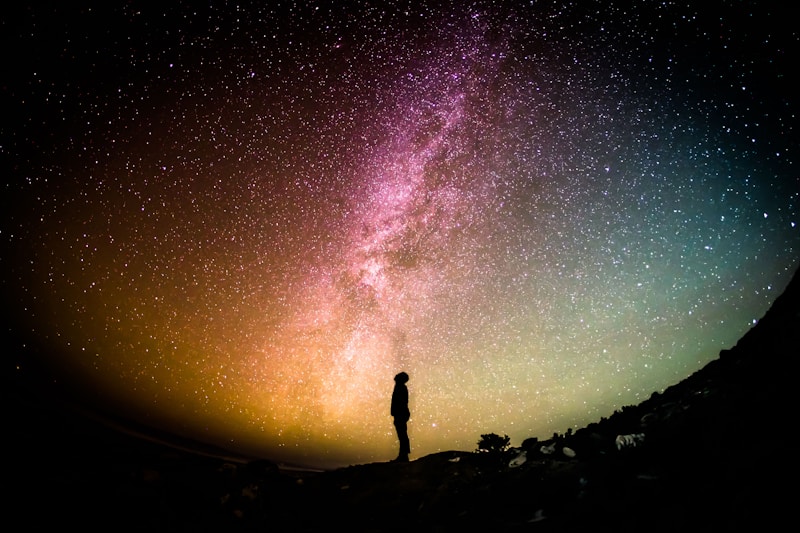
Understanding the science helps you hunt smarter. The aurora is caused by charged particles from the sun colliding with gases in Earth's upper atmosphere. When solar wind, the stream of particles the sun constantly emits, reaches Earth, the magnetic field funnels most of it toward the poles. There, at altitudes of 60 to 150 miles, the particles hit oxygen and nitrogen, which release energy as light. Oxygen at high altitude glows red, oxygen lower down glows green, and nitrogen produces blue and purple.
The color you see depends on the strength of the solar storm and the altitude of the activity. A weak aurora is often just a pale green arc on the northern horizon. A strong one fills the sky with moving curtains of green, pink, and even red. The stronger the solar activity, the further south the aurora is visible, which is why a strong storm can produce sightings as far south as the northern United States and central Europe.

The Northern Lights are visible from late August to mid-April, with the peak viewing season being from September to March. During this time, the Arctic nights are long and dark, providing optimal conditions for aurora viewing. The sun does not rise at all above the Arctic Circle for weeks around the winter solstice, which gives maximum darkness but also the coldest weather.
October, November, February, and March are the practical sweet spots. September offers milder temperatures, unfrozen lakes for reflections, and the start of the dark season. February and March bring longer days, slightly warmer weather, and often more stable weather patterns. December and January have the longest nights but also the most cloud cover and the deepest cold, which makes standing outside for hours genuinely punishing.
The best time to see the Northern Lights is typically between 10 PM and 2 AM local time. This is when the aurora is most active due to solar wind activity, though a strong display can start as early as 7 PM or run past 3 AM. The aurora operates on its own clock, so plan to be out for several hours rather than checking the sky at 11 and going to bed.
Check the Kp index before your trip. This index measures solar activity on a scale of 0 to 9, and a Kp of 5 or higher indicates good aurora viewing conditions at mid-latitudes, while a Kp of 3 is often enough for a strong display inside the Arctic Circle. The Kp index is a forecast, not a guarantee, and it can change within hours, so check it nightly rather than relying on a single pre-trip reading.
Tromso is known as the "Northern Lights Capital" due to its location inside the Arctic Circle and a relatively mild coastal climate that keeps the skies clearer than inland areas at the same latitude. Lofoten Islands offer dramatic landscapes with the aurora as a backdrop, with mountains dropping straight into the sea. Tromso is also a real city with restaurants, museums, and infrastructure, which makes it the easiest Arctic base for travelers who want comfort alongside the chase.
Reykjavik is a great base for aurora hunting, and you can often see the lights from the city outskirts on a strong night. The Golden Circle route provides multiple viewing spots, and the Icelandic countryside offers dark skies away from city lights. Self-drive trips work well here in winter if you are comfortable with icy roads, and the South Coast offers waterfalls and black-sand beaches as foreground for aurora photos. For a complete Arctic adventure, check out our Iceland route.
Rovaniemi and Lapland are popular destinations, and the region is the spiritual home of Santa Claus tourism, which makes it great for families. Many resorts offer glass igloos for comfortable aurora viewing, where you can watch the lights from a heated bed, and the Finnish Lapland cloud cover is statistically lower than coastal Norway, which improves your odds.
Abisko has a unique microclimate that often provides clear skies, making it one of the best places in Europe to see the Northern Lights. The Abisko Blue Hole, a gap in the cloud cover caused by local geography, gives the area a statistical advantage over almost anywhere else in the aurora zone. The trade-off is that Abisko is remote and requires a long journey.
Yellowknife in the Northwest Territories is one of the best places in North America to see the aurora. The clear winter skies, flat terrain, and low light pollution make it ideal, and the auroral oval passes directly overhead more often than at most populated latitudes. It is colder than the Nordic destinations, but the viewing odds are excellent, with operators reporting over 90 percent success over a three-night stay.

The Arctic cold is the real challenge of an aurora trip, not the aurora itself. The core principle is layering, because you will be standing still for hours in temperatures that can drop below minus 4 Fahrenheit with wind chill.
Seeing the Northern Lights requires patience. Even on nights with high solar activity, the aurora might not appear until late, or it might be faint. Be prepared to wait, often in the cold, for several hours. The best displays sometimes happen after midnight, when most day-trippers have given up and gone back to their hotels.
Light pollution can obscure the aurora. Head to remote areas away from cities and towns for the best viewing. In Reykjavik or Tromso, a 20-minute drive out of town makes a dramatic difference, and many operators run buses to dedicated dark-sky locations specifically for aurora watching.
Use apps like Aurora Forecast, My Aurora Forecast, or Space Weather Live to check aurora predictions for your location. Check the cloud forecast just as carefully, because a clear sky is the single most important factor. A high Kp under overcast skies means nothing; a moderate Kp under a clear sky can produce a stunning show.
Many Arctic hotels and lodges offer aurora alert services that wake guests when the lights appear. In Finnish Lapland, glass-igloo resorts include this service as standard, and in Iceland some hotels post a wake-up call list at the front desk. Use them, because you do not want to be the person asleep when the sky ignites.
Clear skies are essential for aurora viewing. Cloud cover can ruin even the best aurora forecast. Check the local cloud forecast nightly and be willing to drive to a different area to find a gap in the clouds, which is why a rental car is so valuable in Iceland and northern Norway.
Many first-time aurora photographers use automatic settings, which rarely work well for capturing the lights. Learn manual settings before your trip, practice in your backyard at night, so you are not fumbling in the cold with numb fingers when the aurora finally appears.
Arctic temperatures can drop well below freezing, and standing still for hours is very different from walking through the same temperature. Make sure you're properly dressed for the conditions, with emphasis on boots and mittens, where most people lose heat fastest.
The Northern Lights are a natural phenomenon and can't be guaranteed. Manage your expectations and enjoy the experience regardless, because the Arctic night, the stars, and the silence are themselves extraordinary. Travelers who go only for the aurora often leave disappointed; those who go for the Arctic itself leave happy even on a quiet night.
The most common mistake is a single-night aurora trip. Cloud and solar activity are both unpredictable, and one night gives you roughly a 40 percent chance of a sighting. Plan for at least three, ideally four to six, nights in a prime location to push your odds above 80 percent.
Chasing the Northern Lights is an adventure like no other. With proper planning, the right equipment, and a bit of luck, you'll witness one of nature's most breathtaking displays. Whether you're in Norway, Iceland, Finland, or Canada, the experience of seeing the aurora dance across the sky is unforgettable, and even the nights when it does not appear, the silence, the cold, the stars, and the anticipation stay with you. Travel for the Arctic itself, treat the aurora as the potential highlight rather than the only point, and you will have a trip worth every cold finger and lost hour of sleep.
Start planning your Northern Lights adventure today and prepare to be amazed. For a complete itinerary, see our Iceland route, one of the most accessible aurora destinations from North America and Europe.
Mark Wilson is a nature and travel photographer who has spent more than fifteen winters in the Arctic Circle, chasing the aurora from Abisko to Yellowknife. His images have appeared in National Geographic, BBC Earth, and the Travlike travel guides. He believes the Northern Lights are worth every frozen finger and every sleepless night, and that the best aurora strategy is simple: go north, stay long, dress warm, and look up.
Check out our Arctic travel routes
Explore Iceland Route