Key Takeaways
- Florence is the birthplace of the Renaissance and home to the world's greatest collection of Italian Renaissance art.
- Paris has more top-tier museums than any other European city, from the Louvre to the Musee d'Orsay.
- Berlin is Europe's undisputed capital of contemporary art, with 170+ galleries and a thriving alternative scene.
- Spring (April-May) and fall (September-October) offer the best weather and smallest crowds for cultural travel.
- Book timed-entry museum tickets 1-3 months in advance to skip lines and guarantee entry to popular museums.
Europe is the cultural capital of the world. Centuries of history, art, music, literature, and architecture are packed into every city, town, and village. You can stand in front of a painting that changed the course of Western art, attend an opera in a 19th-century house, wander through medieval streets, and eat at a restaurant that has been serving food for 500 years - all in the same day.
What makes European cultural travel so rewarding is how accessible it is. You can hop on a high-speed train and be in a completely different country with its own language, art, and cuisine in a couple of hours. Museums are world-class but often surprisingly affordable. The streets themselves are open-air museums - just walking around a historic European center is a cultural experience.
After years of museum-hopping across the continent, we have picked the 10 European cities that every art and culture lover should prioritize. Each entry below covers must-see museums, hidden gems, the best time to visit, average daily costs, and what makes each city's cultural scene unique. Let us dive in.
The Top 10 Cultural Cities in Europe
1. Florence, Italy
Florence is the birthplace of the Renaissance and quite simply the greatest concentration of Renaissance art on Earth. This compact Tuscan city was home to Michelangelo, Leonardo da Vinci, Botticelli, Donatello, Brunelleschi, and Machiavelli - and the art they created is still here, in the very buildings and streets that inspired it. The entire historic center is a UNESCO World Heritage Site, and walking its cobblestone streets feels like stepping into a 15th-century painting.
The Uffizi Gallery is the crown jewel - Botticelli's "Birth of Venus" and "Primavera" alone are worth the trip. The Accademia Gallery houses Michelangelo's "David," a sculpture so perfect it is hard to believe it was carved from a single block of marble. Do not miss the Bargello museum for Renaissance sculpture, the Duomo with Brunelleschi's revolutionary dome, or the Basilica di San Lorenzo with its Michelangelo-designed Medici tombs. Our Florence travel guide covers all the artistic highlights and how to avoid the crowds.
2. Paris, France
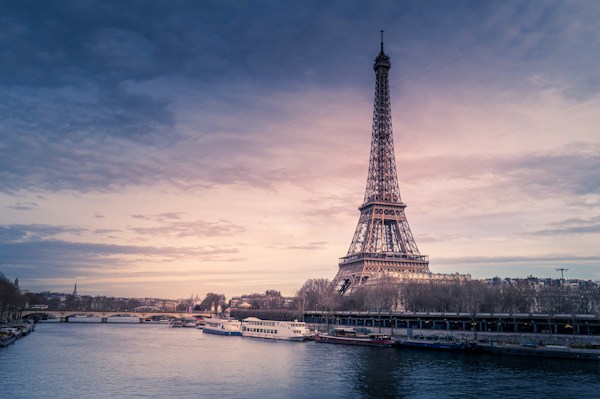
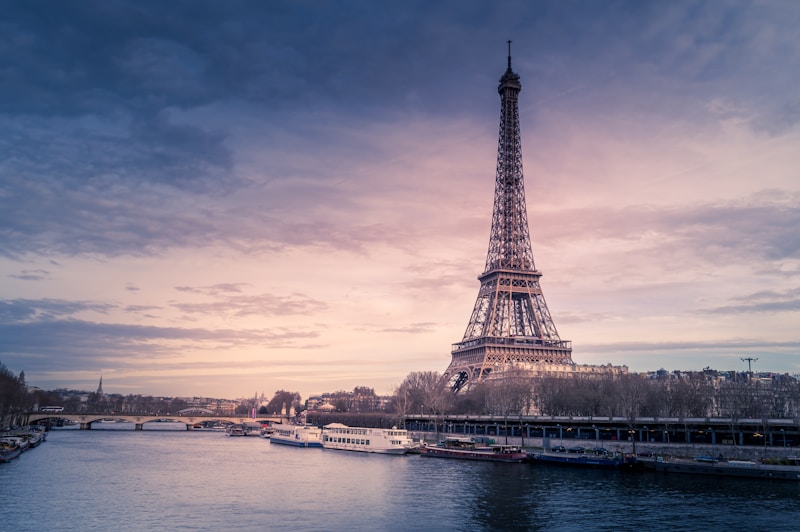
Paris is the museum capital of the world, with more world-class art institutions than any other European city. The Louvre alone is the largest and most visited museum on Earth, housing 35,000 works including the Mona Lisa, Venus de Milo, and Winged Victory of Samothrace. But the Louvre is just the beginning - the Musee d'Orsay has the greatest collection of Impressionist and Post-Impressionist art in the world, displayed in a stunning Beaux-Arts former railway station.
The Pompidou Center is Europe's premier modern and contemporary art museum, with works by Matisse, Picasso, Warhol, and countless others. The Rodin Museum, housed in the sculptor's former home and studio, lets you see "The Thinker" and "The Kiss" in a beautiful garden setting. Beyond museums, Paris offers the Palais Garnier opera house, countless historic theaters, jazz clubs in Saint-Germain, and street art in the 13th arrondissement. Plan your perfect Paris itinerary with our detailed guide to the city's art and culture.
3. Berlin, Germany
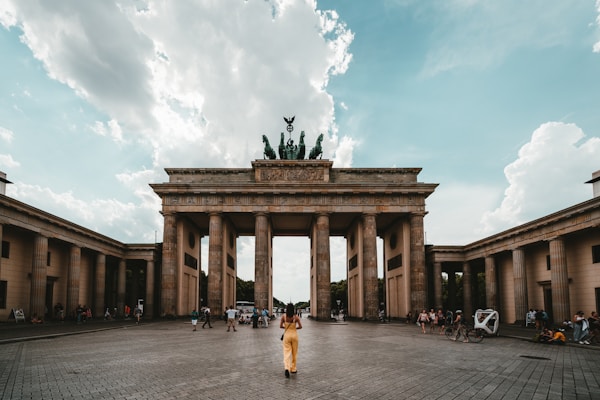
Berlin is Europe's undisputed capital of contemporary art. The city's turbulent 20th-century history - division by the Wall, underground counterculture in the East, creative rebirth after reunification - created a fertile ground for artistic experimentation that continues today. With 170+ galleries, three major contemporary art museums, and a thriving alternative scene, Berlin is where new art is made, not just displayed.
Museum Island, a UNESCO site in the middle of the Spree River, houses five world-class museums covering everything from ancient civilizations to 19th-century art. The Hamburger Bahnhof is one of Europe's most important contemporary art museums, housed in a converted 19th-century railway station. The East Side Gallery - the longest remaining stretch of the Berlin Wall, painted by artists from around the world - is the world's largest open-air gallery. Explore Berlin's art scene with our comprehensive guide to galleries, museums, and alternative culture.
4. Rome, Italy
Rome is an open-air museum where 2,000-year-old ruins sit side-by-side with Baroque fountains, Renaissance palaces, and modern cafes. The city's layers of history are unmatched - you can walk from a 1st-century Roman forum to a 4th-century basilica to a 17th-century piazza in minutes. Art in Rome is not just in museums - it is on every street corner, in every church, and in every public square.
The Vatican Museums are the heavyweight - a sprawling complex of galleries, tapestries, and frescoes culminating in Michelangelo's Sistine Chapel ceiling and the Pieta in St. Peter's Basilica. The Capitoline Museums, designed by Michelangelo himself, house the greatest collection of Roman sculpture in the world. The Borghese Gallery, set in a lavish 17th-century villa, features masterpieces by Bernini, Caravaggio, Raphael, and Titian. And of course, the Colosseum, Roman Forum, and Pantheon are cultural experiences in their own right. Our Rome travel guide helps you navigate the city's ancient and artistic treasures.
5. Amsterdam, Netherlands
Amsterdam is a golden age of art packed into one compact, walkable city. The Dutch Golden Age produced Rembrandt, Vermeer, Hals, and countless other masters, and their greatest works are right here. But Amsterdam is also a powerhouse of modern and contemporary art, with the Stedelijk Museum and a vibrant gallery scene centered around the Jordaan and Oud-West neighborhoods.
The Rijksmuseum is the star - its Gallery of Honor showcases the greatest masterpieces of Dutch art, including Rembrandt's "Night Watch" and Vermeer's "The Milkmaid." The Van Gogh Museum houses the largest collection of Van Gogh's work in the world - 200 paintings, 500 drawings, and 750 letters. The Stedelijk Museum has an outstanding collection of modern art with works by Mondrian, Malevich, Warhol, and Koons. And do not forget the city itself - the canal ring is a UNESCO site, and exploring Amsterdam's neighborhoods by bike or on foot is a cultural experience. Discover Amsterdam's art and canal culture with our detailed itinerary.

6. Vienna, Austria
Vienna is the cultural capital of Central Europe, a city where classical music, fine art, imperial palaces, and coffeehouse culture come together in perfect harmony. For centuries, Vienna was the seat of the Habsburg Empire, and the city's museums and palaces are filled with the treasures they collected. The city was home to Mozart, Beethoven, Haydn, Schubert, Strauss, and Freud - and their legacy lives on in its concert halls, cafes, and intellectual life.
The Kunsthistorisches Museum is one of the world's greatest art museums, with a collection that spans ancient Egypt to the Renaissance and includes works by Raphael, Titian, Caravaggio, and Vermeer. The Albertina has one of the most important graphic art collections in the world, with drawings by Durer, Michelangelo, and Klimt. The Belvedere Palace houses the greatest collection of Gustav Klimt's work, including "The Kiss." And of course, no visit to Vienna is complete without a classical music concert in a historic venue. Pair Vienna with Salzburg, Mozart's birthplace just a few hours away by train.
7. London, United Kingdom
London is one of the world's great cultural capitals, with a staggering 250+ museums, 1,000+ art galleries, and a theater scene that rivals New York's. What is more, most of the major museums are completely free - making London surprisingly good value for cultural travelers despite its high hotel prices. From ancient artifacts to cutting-edge contemporary art, London has it all.
The British Museum is one of the world's greatest museums of human history and culture, with artifacts from around the globe including the Rosetta Stone and the Parthenon Marbles. The National Gallery in Trafalgar Square houses one of the world's finest collections of European painting, from the Middle Ages to the early 20th century. The Tate Modern, housed in a converted power station on the South Bank, is the most visited modern and contemporary art museum in the world. And the West End theater scene offers everything from long-running musicals to new plays by award-winning playwrights. Plan your London cultural itinerary with our guide to the city's best museums, galleries, and theaters.
8. Seville, Spain
Seville is the soul of Andalusian culture, a city of flamenco, tapas, Moorish architecture, and passionate artistic expression. This is where flamenco was born, where the world's greatest bullfighters have performed, and where the Alcazar showcases the stunning Moorish architecture that defines southern Spain. The city has a vibrant energy, especially during the annual Feria de Abril, when the whole city dresses up in traditional Andalusian costumes for a week of dancing, drinking, and celebration.
The Real Alcazar is the oldest royal palace still in use in Europe, a stunning complex of Moorish courtyards, gardens, and tilework. The Seville Cathedral is the largest Gothic cathedral in the world and houses Christopher Columbus' tomb. The Museum of Fine Arts has one of Spain's best collections of Spanish Baroque painting, including works by Murillo, Zurbaran, and Velazquez. But the real cultural experience in Seville is the flamenco - head to the Triana neighborhood for authentic tablaos where you can see live flamenco in an intimate setting. Explore Seville's flamenco and Moorish heritage with our detailed travel guide.

9. Prague, Czech Republic
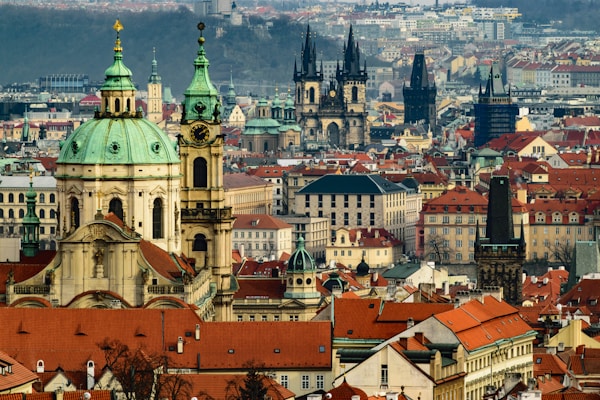
Prague is one of the best-preserved medieval cities in Europe, with a skyline of Gothic spires, baroque domes, and a 1,000-year-old castle perched above the Vltava River. The city survived World War II virtually untouched, so its historic core is remarkably intact. Prague has a rich cultural heritage of classical music (Mozart premiered "Don Giovanni" here), Art Nouveau architecture, and a thriving contemporary art scene.
The National Gallery Prague has three main locations housing Czech and European art from the Middle Ages to the present day. The Mucha Museum is dedicated to Alfons Mucha, the Art Nouveau master who defined the style with his iconic posters. The National Museum, newly reopened after a seven-year renovation, showcases natural history and Czech history in a grand neo-Renaissance building. But the real cultural treasure of Prague is the city itself - wander the cobblestone streets of Mala Strana, cross the Charles Bridge with its 30 baroque statues, and lose yourself in the Old Town. Our Prague travel guide covers all the city's cultural highlights and hidden gems.
10. Athens, Greece
Athens is the cradle of Western civilization - the birthplace of democracy, philosophy, theater, and the Olympic Games. Standing atop the Acropolis, looking down at the city and out toward the Aegean Sea, you can feel the weight of 2,500 years of history. The city's ancient monuments are among the most important cultural sites in the world, and its museums house the treasures of classical Greek civilization.
The Acropolis is the star attraction - the Parthenon, Erechtheion, Propylaea, and Temple of Athena Nike perched on a rocky hill above the city. The Acropolis Museum, opened in 2009 at the foot of the hill, houses all the artifacts found on the site in a stunning modern building with glass floors revealing ancient ruins below. The National Archaeological Museum is one of the world's greatest museums of ancient Greek art, with the Mask of Agamemnon, the Antikythera mechanism, and countless marble statues. And do not forget the ancient theater of Epidaurus, a day trip from Athens, with acoustics so perfect you can hear a pin drop from the back row. Discover ancient Athens with our guide to the city's archaeological sites and museums.
Planning Your European Cultural City Trip
How Many Cities Should You Visit?
It is tempting to try to see everything, but cultural travel is best enjoyed at a leisurely pace. We recommend spending at least 3 full days in each city to properly explore its museums and neighborhoods. For a two-week trip, that means 3-4 cities maximum. If you try to pack in more, you will spend half your time traveling and the other half rushing through museums without really absorbing anything. Quality over quantity is especially important with art - you can only look at so many paintings in a day before your eyes glaze over and everything starts to look the same.
Beating the Crowds
Museum crowds are the biggest challenge of European cultural travel, especially in summer. Our top tips: book timed-entry tickets for the first slot of the day. Museums are quietest in the first hour after opening, and you can often get that "alone with the masterpiece" feeling if you arrive early. Avoid weekends if possible, when locals and tourists both descend on major museums. Lunchtime (12-2pm) is also surprisingly quiet, as most visitors break for food. And finally, do not overlook smaller, lesser-known museums - some of our best cultural experiences have been in tiny, obscure galleries with no crowds at all.
Beyond Museums
Great cultural travel is not just about checking museums off a list. It is about experiencing the living culture of a city - the food, the music, the theater, the street life, the way people live. Take a cooking class. Go to a concert or the opera. Wander neighborhoods where locals live. Sit at a cafe and watch the world go by. Learn a few phrases in the local language. These are the experiences that stick with you long after you have forgotten the names of paintings. The best cultural travelers do not just look at art - they live it.
Final Thoughts
Europe's cultural cities are living museums where thousands of years of human creativity are on display every single day. Whether you are standing in front of Michelangelo's David in Florence, gazing at the Mona Lisa in Paris, or discovering a new artist in a Berlin gallery, these cities have the power to change how you see the world.
You do not need an art history degree to appreciate European culture. You just need curiosity, an open mind, and the willingness to slow down and look. The best piece of advice we can give is to pick one masterpiece in each museum and really spend time with it. Sit down, look closely, and let it sink in. One meaningful encounter with a work of art is worth a hundred quick glances.